
Rising Surf
|
"There's
a new wave of instrumental music out there. The bands performing it are the Lord's
of the New Surf!"...Phil Dirt
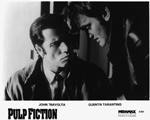
So you've noticed that killer music in "Pulp Fiction". How could you not. The film opens with a sleazy scene in a coffee shop & some raunchy dialog, then WHAM! Dick Dale & The Del-Tones' "Miserlou" slams into your consciousness like a nuclear assault. You rushed out & bought the soundtrack, drooled over the beauty of the Lively Ones' "Surf Rider" and partied to the Revels' "Comanche". Worn out, you sat down to watch the "X-Files", and there it is again, in the Bud Light commercials, the MinuteMaid spots, and the Taco Bell ads...suddenly you realize it's been everywhere around you and you hadn't quite noticed. Now you want some, but when you ask the clerk at the record store, he says "Huh?". Who you gonna turn to? Surf Buster, that's who, (Phil Dirt - that's me). |

|
 It may well be that you've discovered surf music via the classic tracks in "Pulp Fiction",
but surf music is not the innocent adolescent pass time it was 30 years ago, if you even old enough
to remember that. It's not about Gidget & Moondoggie, or lame beach movies like "Beach
Blanket Bingo", or modern dark exploitation flicks like "Surf Nazis Must Die".
It's not even much about the surf revival that had so many false starts in the eighties, and it's
even less about surfing. It's vital, infectious, and it's mostly new.
It may well be that you've discovered surf music via the classic tracks in "Pulp Fiction",
but surf music is not the innocent adolescent pass time it was 30 years ago, if you even old enough
to remember that. It's not about Gidget & Moondoggie, or lame beach movies like "Beach
Blanket Bingo", or modern dark exploitation flicks like "Surf Nazis Must Die".
It's not even much about the surf revival that had so many false starts in the eighties, and it's
even less about surfing. It's vital, infectious, and it's mostly new.
 This has not been without it's struggles. Even if you discount the 15 years that surf music has been
trying to come back, there are the greater public perception problems to overcome. The first is the
automatic association with Frankie & Annette, and the second is the misconception that the
Beach Boys or Jan & Dean did surf music. The depth of the problem is exemplified in
an incident I witnessed at an outdoor event called "Woodies on the Wharf" this past
summer in Santa Cruz, California, at town called "Surf City" with an appalling
lack of surf music. Tri-Surf recording artists the Eliminators where about to begin
their second set.
This has not been without it's struggles. Even if you discount the 15 years that surf music has been
trying to come back, there are the greater public perception problems to overcome. The first is the
automatic association with Frankie & Annette, and the second is the misconception that the
Beach Boys or Jan & Dean did surf music. The depth of the problem is exemplified in
an incident I witnessed at an outdoor event called "Woodies on the Wharf" this past
summer in Santa Cruz, California, at town called "Surf City" with an appalling
lack of surf music. Tri-Surf recording artists the Eliminators where about to begin
their second set.
 The question of what is surf music is a one of considerable debate among collectors, musicians, surfers,
critics, musicologists, paleomuses, the general public, wayfaring urchins, and Cowabunga web
surfers. Opinions range from the definitive purist to the ignorant absurd. Expecting agreement on
the definition, or better yet, that Joe and Jane Average would have a clue about this, is like not
realizing that the trouble with democracy is that the people ahead of you in line at McDonalds vote!
There's a wehole series dedicated to this question called What Is Surf.
The question of what is surf music is a one of considerable debate among collectors, musicians, surfers,
critics, musicologists, paleomuses, the general public, wayfaring urchins, and Cowabunga web
surfers. Opinions range from the definitive purist to the ignorant absurd. Expecting agreement on
the definition, or better yet, that Joe and Jane Average would have a clue about this, is like not
realizing that the trouble with democracy is that the people ahead of you in line at McDonalds vote!
There's a wehole series dedicated to this question called What Is Surf.
 Fender The surf sound is characterized by a rhythm section comprised of the bass & drums and rhythm
guitar. When the rhythm guitar is reverbed heavily, few chords are used. The archetypal surf instrumental
with piano is the Chantays' "Pipeline", with horn it would be Dick Dale's "Miserlou",
and with the third guitar, the Astronauts "Baja".
Fender The surf sound is characterized by a rhythm section comprised of the bass & drums and rhythm
guitar. When the rhythm guitar is reverbed heavily, few chords are used. The archetypal surf instrumental
with piano is the Chantays' "Pipeline", with horn it would be Dick Dale's "Miserlou",
and with the third guitar, the Astronauts "Baja".
 Instrumental Surf suffered arrested development in '64 inflicted by the British Invasion. The
Lords of the New Surf picked it up from there, and then proceeded to re-ignite the evolution that
had only just begun 3 decades ago.
Instrumental Surf suffered arrested development in '64 inflicted by the British Invasion. The
Lords of the New Surf picked it up from there, and then proceeded to re-ignite the evolution that
had only just begun 3 decades ago.
 In the sixties, LA was the world center for surf. In the nineties, the center seems to be the San
Francisco Bay Area, at least for bands who are pushing the envelope.
In the sixties, LA was the world center for surf. In the nineties, the center seems to be the San
Francisco Bay Area, at least for bands who are pushing the envelope.
 are all stretching the definition. It's just concentrated here in the San Francisco Bay Area with
bands like the Berzerkers, Buzzy Frets & his Surfabilly Orchestra, the Ultras, the
Torpedoes, and Pollo Del Mar.
are all stretching the definition. It's just concentrated here in the San Francisco Bay Area with
bands like the Berzerkers, Buzzy Frets & his Surfabilly Orchestra, the Ultras, the
Torpedoes, and Pollo Del Mar.